
Introduction
As the Sudan war enters its third year, the humanitarian situation is dire. Over half of the population now requires humanitarian assistance, and Sudan is often described as the world’s largest humanitarian crisis. Research shows that international support for crisis response represents only a small part of a much larger pool of resources that the formal humanitarian system does not see or ‘count’.Due to reduced international funding and limited access on the ground, Sudanese communities have been forced to fall back on their own support systems. In fact, the tradition of Nafeer and broader social networks (solidarity networks) has become the backbone of Sudan’s humanitarian response. And while the aid sector talks about a “humanitarian reset” and the need for “localisation”, few truly grasp the sources of Sudanese society’s organic response to the crisis. Understanding these indigenous mechanisms is crucial if we are to move from calling for local partnerships to adapting our approaches to work with them effectively.
Understanding Nafeer and Kinship: A Comparative View
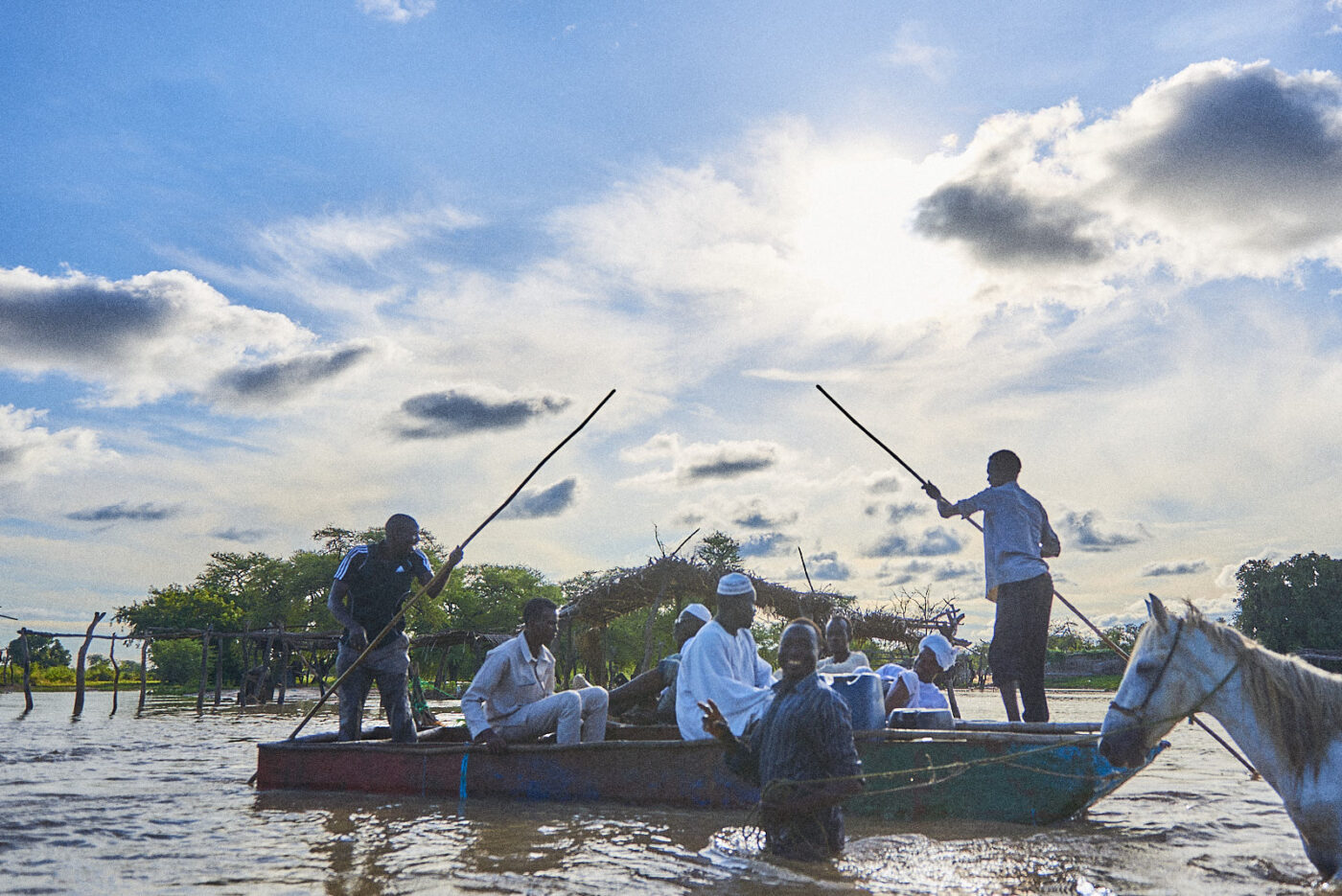
Nafeer is a Sudanese tradition of communal mobilisation. Literally a “call to mobilise,” it brings neighbours and community members together to meet a shared need or respond to a crisis. It is typically spontaneous, decentralised, and highly cooperative, with deep historical roots. Particularly, rural communities would organise a Nafeer to harvest crop or build a home, but it was also revived in modern crises. There is usually no formal hierarchy; someone simply “calls” for help, and people respond, donating labour, supplies, or money as needed. For instance, in the first days of the current war, communities in Al Jazirah state mobilised to receive and assist families displaced from Khartoum; widely shared images and videos showed residents offering help along the roadside.
Beyond these community-wide mobilisations, individuals rely on family and tribal ties as informal safety nets. In times of hardship or crisis, Sudanese turn first to their extended families, tribes, or even people in social circles for support. For example, when the war began, many people fleeing Khartoum found shelter with relatives in safer areas. The diaspora sent money home, and community groups pooled resources for those who were affected. Even friends and past neighbours took in the displaced in some cases. Support from friends or neighbours in safer areas is often the first line of assistance. As these are longstanding relationships that are built on trust, they react quickly to provide shelter, food, and comfort without waiting for outside assistance. Even outside crises, solidarity is deeply ingrained in the culture, hosting guests and supporting social networks in need are a central part of Sudanese heritage. These familial and social networks operate flexibly, scaling up their support when the formal aid system and the state in disarray or unable to reach communities.
While Nafeer is typically short-term mass mobilisation in response to a specific emergency, kinship and social networks offer a continuous safety cushion. They are relational support mechanisms based on blood and social bonds. Nafeer’s efforts revolve around specific events and often organise through social media or community leaders to form ad-hoc teams for tasks like coordinating rescue and food distribution. On the other hand, Kinship support is often decentralised and personal, happening household to household in informal and invisible ways. Also, both systems show incredible resilience and adaptability. Together these social systems have been crucial lifelines since the eruption of the war in April 2023.
Local Responses in Action: Practical Examples
A vivid example of the Nafeer role in response to a crisis was what occured during the 2013 Khartoum floods. When severe rains struck and thousands of homes were destroyed, Sudanese volunteers sprang into action ahead of any formal aid. A volunteer-led group spontaneously formed under the banner of ‘Nafeer’, harnessing social media to coordinate help. Within days, they had an “operations centre” buzzing with hundreds of youth sorting relief supplies, mapping needs, and dispatching assistance. The initiative supported over 70,000 people affected by floods, providing food, shelter, and emergency kits. Despite limited resources, it mobilised local networks to deliver aid.
When fighting engulfed Khartoum, a friend fled with his family to an old neighbour in Gezira state. “I stayed there for almost 6 months before moving to another state. Even though many who were displaced to the same neighbourhood were paying rent, it was not the case for me. It actually helped me to focus on relocating and finding another job “.
As the conflict continued, hundreds of thousands of displaced Sudanese found shelter with relatives, friends, and even strangers. Households doubled or tripled overnight. Communities organised communal meals and shared water, while relatives abroad sent remittances so families could buy essentials. These kinship networks and wider social ties provided support on a scale and speed no international agency could match.
Challenges Facing International Humanitarian Actors and a Call for Adaptation
Even with significant progress on the localisation agenda since the war began, common challenges and missteps persist in practice. For instance, many international programs still operate in a top-down manner, failing to recognise how Nafeer and kinship support actually function on the ground. One issue is a lack of understanding; the complex social dynamics behind these phenomena are not easy to grasp, so external aid actors might inadvertently sideline or duplicate what communities are already doing. International agencies might create parallel aid committees or gatekeepers that compete with existing volunteer groups, or design aid distribution approaches that ignore family sharing patterns.
Another frequent complaint is that large aid organisations are too slow and inflexible. They often require heavy paperwork or insist on their own protocols, which can overwhelm community volunteers and delay aid2. On the flip side, concerns about trust and risk lead donors to impose strict controls when funding local groups, which ends up placing unequal burdens on volunteers. For example, demanding detailed reports from an Emergency Response Room (ERR) committee working in El Fasher, which means members might risk their live in the process of getting those reports.
International actors must adapt to stay relevant and effective in Sudan’s humanitarian response. Whether prompted by massive funding cuts and calls for a humanitarian “reset,” or by the conflict’s complex operational environment and extreme needs on the ground, the status quo is no longer sufficient. Key principles for adapting international aid to these realities include:
As Sudan’s war and humanitarian crisis grind on, the greatest source of resilience and relief for people comes from within Sudanese society, through traditions like Nafeer and the bonds of kinship and social networks. This includes the recent return movement we are witnessing in Khartoum and other areas. International aid, while vital, must recognise that it is just one part of the puzzle, and it should redesign its role to support these local lifelines rather than overshadow them. In the face of unprecedented suffering, Sudanese communities have not waited for salvation but rather become each other’s salvation. The real question now is not whether to localise, but how to partner with and amplify Sudan’s home-grown responses. The power of the Nafeer, kinship, and social networks is essential to “reset” humanitarian action in Sudan.